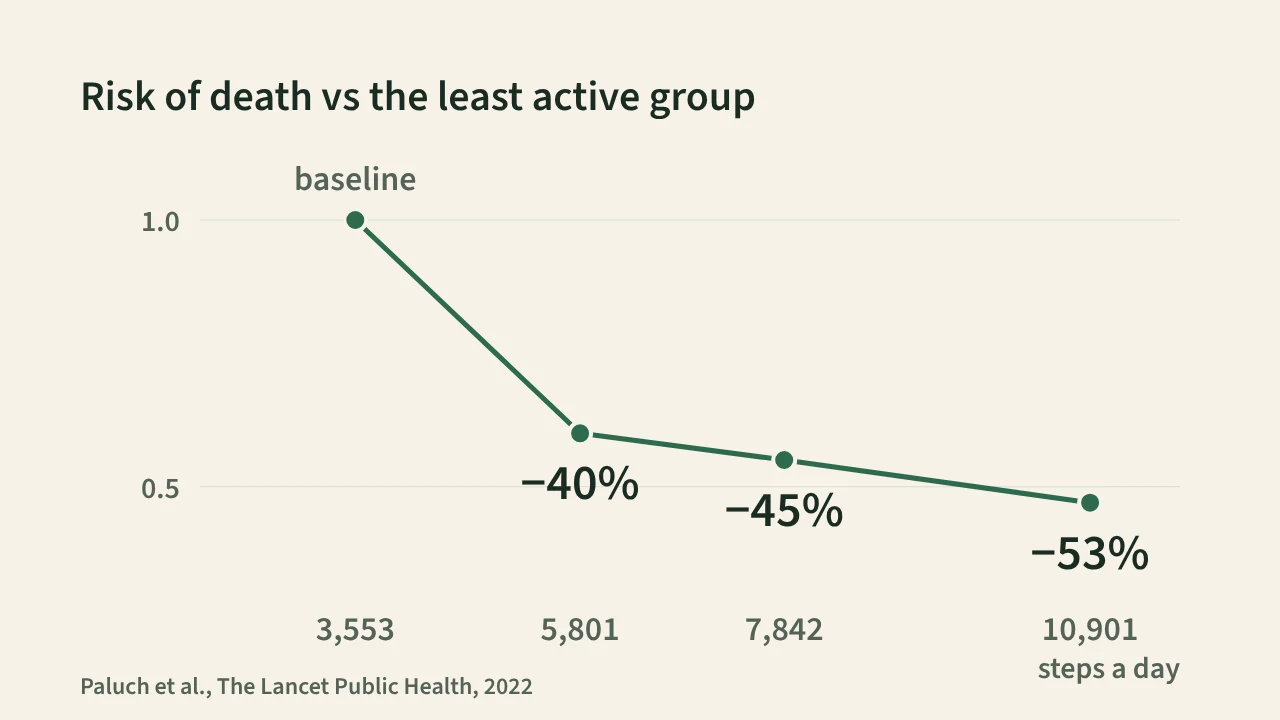
How many steps a day are linked to a longer life?
15 cohorts, 47,471 adults: death risk kept falling up to 6,000–8,000 steps a day after 60 and 8,000–10,000 before 60. What it shows, and what it does not.
Read the articleThis topic reads large studies on health and lifespan and says what they found, how strong the evidence is, and what they do not show. Many longevity findings come from observational studies, so we say when a link is not proof of cause.
Longevity is full of loud promises: pills that "reverse aging", tests that read your "biological age", protocols that claim to add decades. The evidence behind most of them is thin. The habits with the strongest data are less exciting: moving more, keeping muscle, and treating disease that is already there.
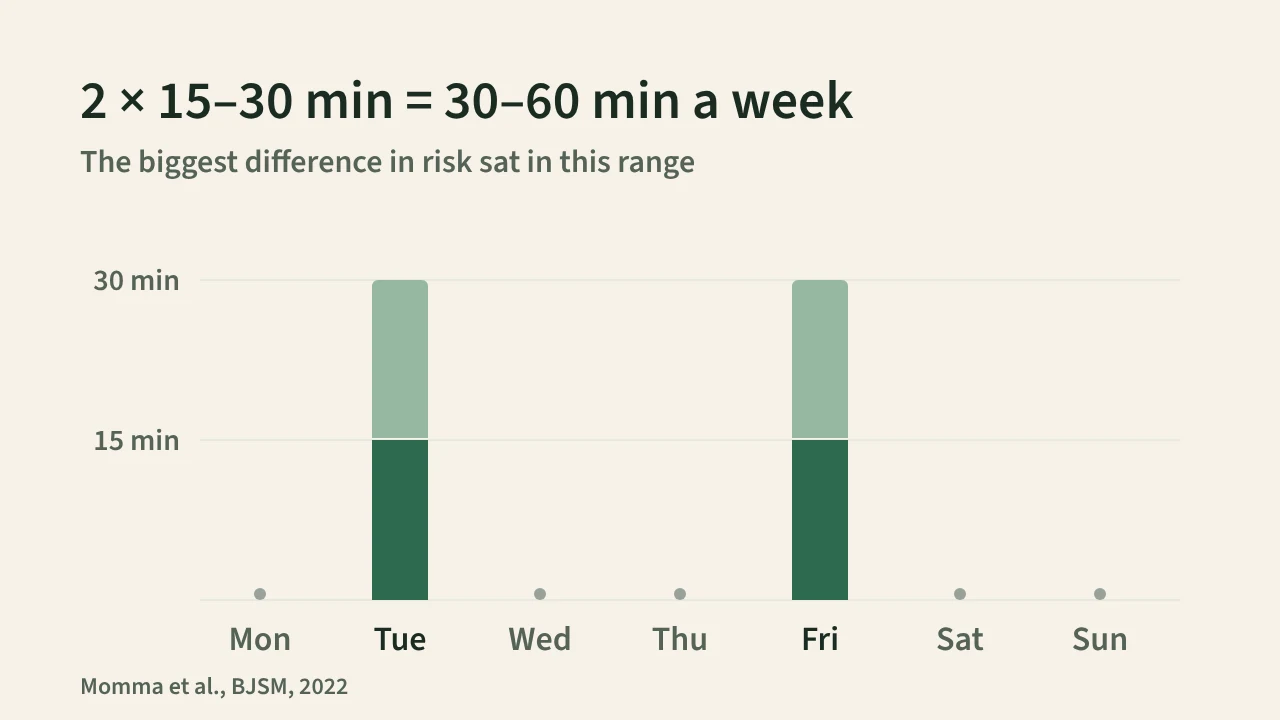
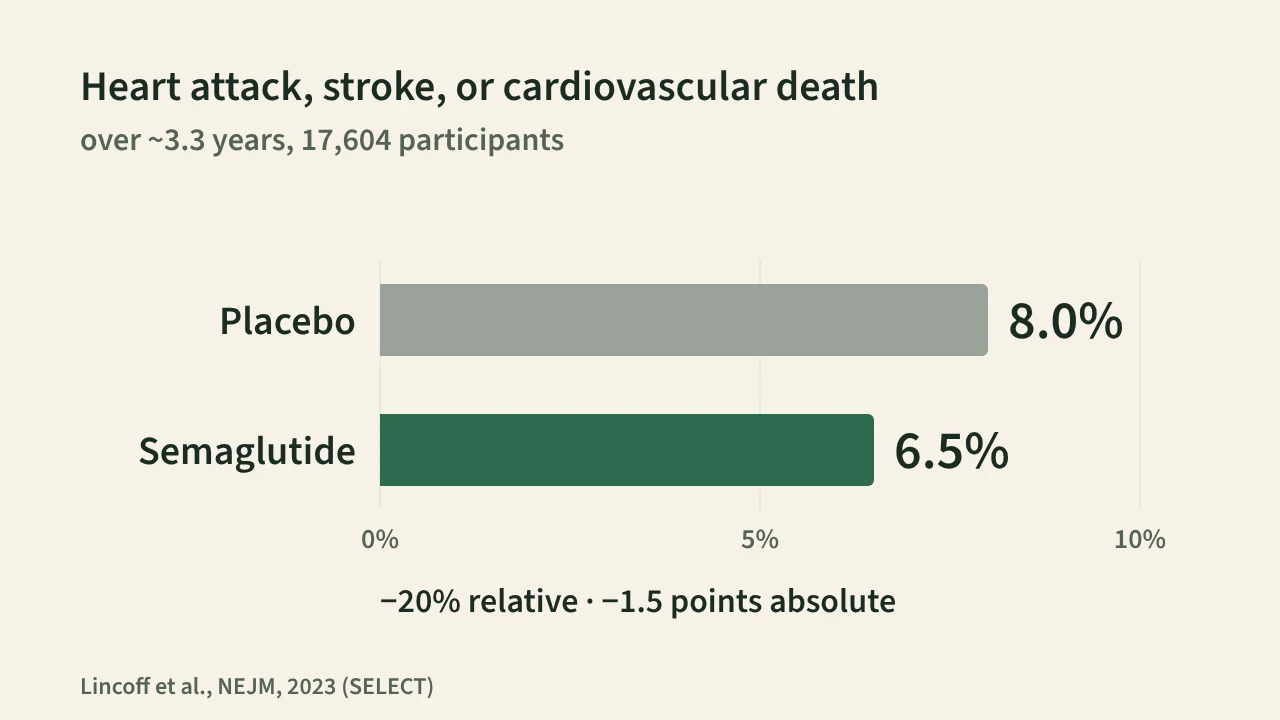
How many steps a day are linked to a longer life reads a meta-analysis of 15 cohorts and 47,471 adults, including why 10,000 is not a magic number. Strength training and longevity covers how much weekly strength work was linked with the biggest difference, and why more was not better. Semaglutide and the heart explains the SELECT trial: who it studied, what "20% lower" means in absolute numbers, and what it does not tell you. These are explanations of research, not medical advice.
15 cohorts, 47,471 adults: death risk kept falling up to 6,000–8,000 steps a day after 60 and 8,000–10,000 before 60. What it shows, and what it does not.
Read the articleA BJSM meta-analysis links 30–60 minutes of strength training a week with about 10–20% lower risk of death. Why more is not better, and how to start.
Read the articleSELECT, NEJM 2023: in 17,604 people with heart disease and overweight but no diabetes, semaglutide cut heart attack, stroke, and cardiovascular death by 20%.
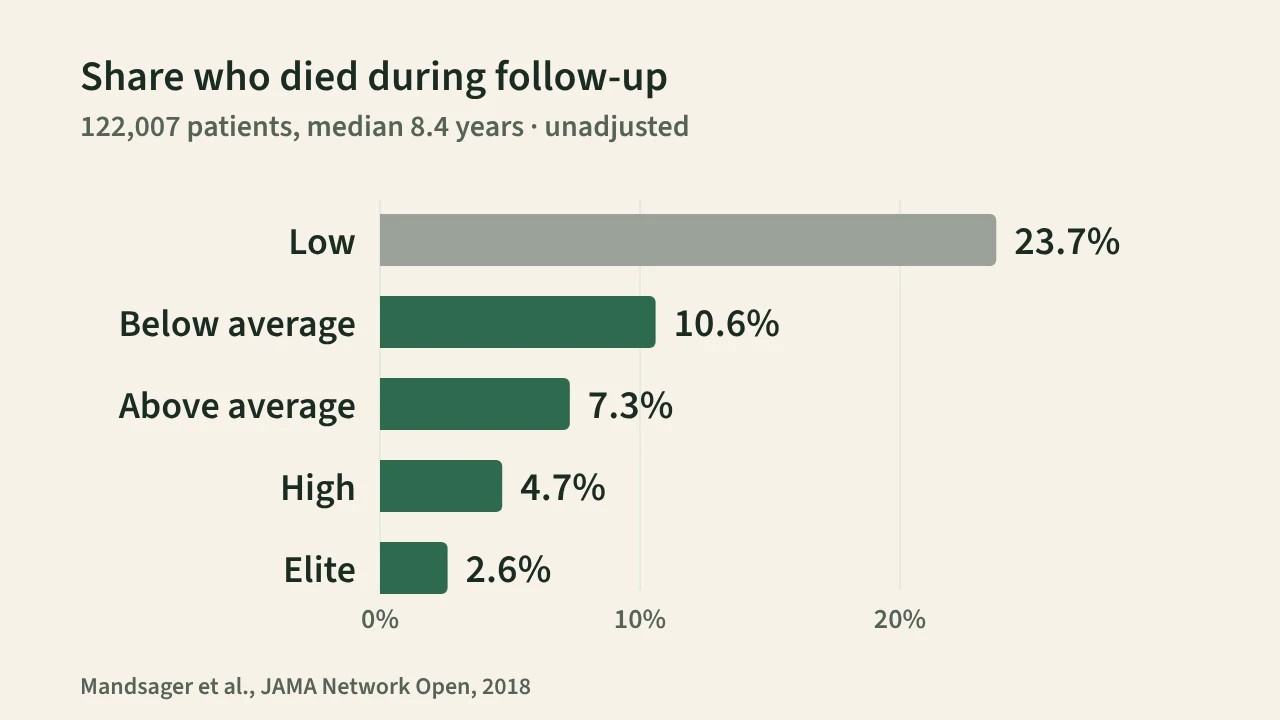
Read the article122,007 patients, 8.4 years of follow-up: the fitter people were on a treadmill test, the less often they died. What it shows and what it does not.
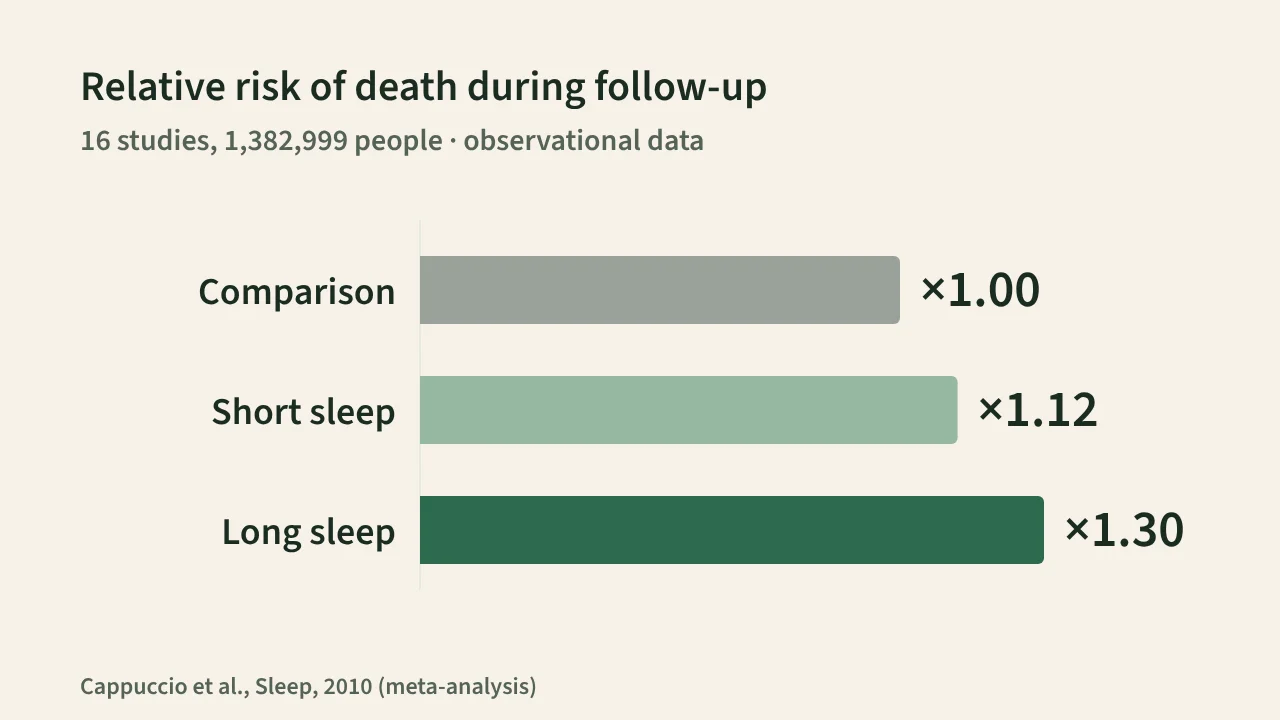
Read the articleA meta-analysis of 1.38 million people: both short and long sleep were linked to a higher risk of death. What the link means and what it does not prove.
Read the article