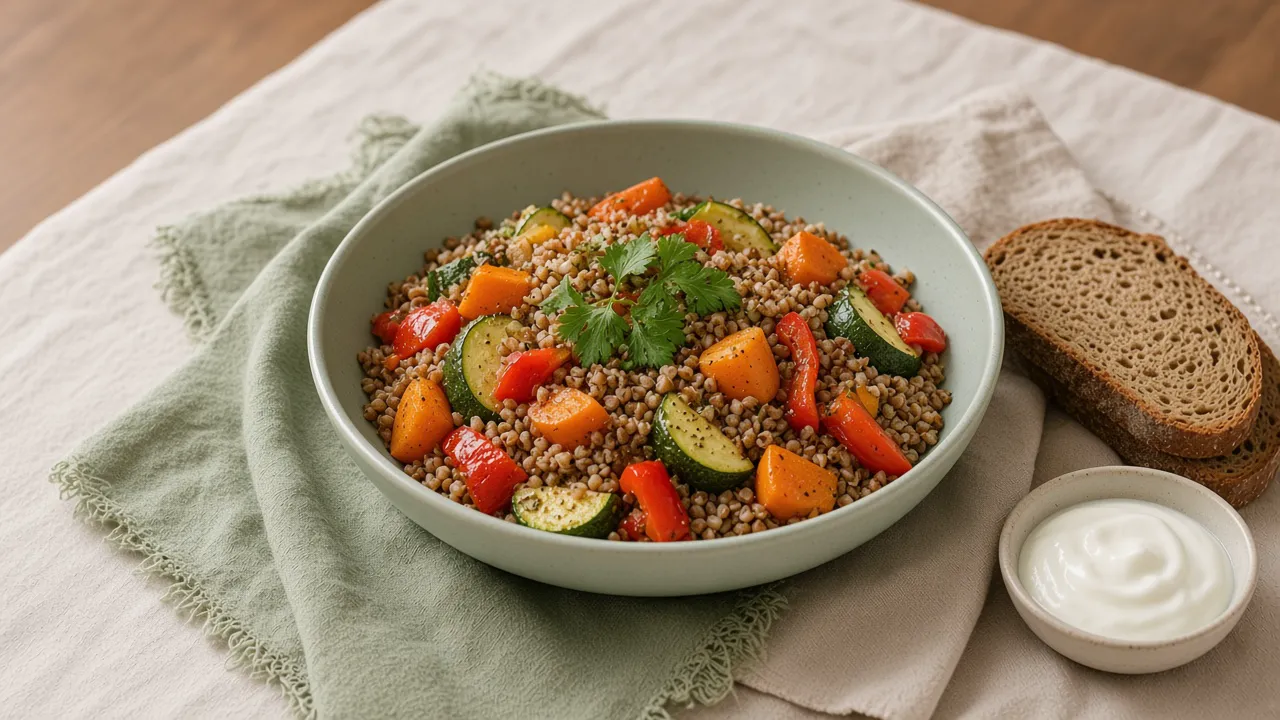
You can eat carbohydrates and lose weight (in a 2014 meta-analysis, both low-carbohydrate and low-fat diets produced weight loss, and the gaps between named diets were small). NIDDK says grain foods such as bread, pasta, and rice are not automatically fattening. WHO describes a healthy diet as energy balance across protein, fats, and carbohydrates, with grains mostly whole. What matters more than a ban on bread, porridge, or potatoes is how much landed on the plate and what the rest of the day looked like.
Bread, rice, potatoes, pasta, and an apple are ordinary food. Sweets and biscuits are carbohydrates too. A bowl of porridge and an open packet of biscuits do not behave the same way: you can see the porridge, and the packet disappears while you are doing something else.
A portion you can see
You do not need grams to one decimal place. You need a portion you would still recognise on Thursday.
- Breakfast: one ladle of cooked porridge, about 150 g of cooked grain, plus an egg or yoghurt. Not “porridge or nothing.” If that ladle keeps coming out heavier than you meant, the check is a kitchen scale, not a tighter rule.
- Lunch: your usual spoon of rice or potatoes, not half the pot “because yesterday I was good.”
- Dinner: if a large plate of grain makes you sleepy, less grain and more vegetables. You do not have to throw the pot out.
- Biscuits: put two or three on a plate and put the packet away. An open packet is not a portion.
If you do check the ladle, any digital kitchen scale with grams and a tare button works. One ordinary option is the Etekcity food kitchen scale (ASIN B0113UZJE2), listed at 11 lb / 5 kg with 1 gram steps. As an Amazon Associate, Lean Wisely earns from qualifying purchases. Weigh the cooked porridge a few times, then let the ladle do the job.
A ladle of porridge with an egg usually holds longer than porridge on its own, after which you want biscuits. If the plate lets you go too quickly, check whether anything was there besides the grain: protein and fullness.
An apple can stay. A glass of juice is several pieces of fruit without the chewing; the figures are in the piece on drinks. A “fitness bar” is sometimes closer to a sweet: compare the energy on the wrapper with an ordinary snack.
When the bread gets banned
A week without porridge often looks like this. You skip it in the morning. By the middle of the day the biscuits in the drawer are gone. By evening you are cross. At the weekend there is pizza “since it is already ruined,” and on Monday the porridge is shameful again.
“No carbs” often does not last. Then everything comes back at once. A plate with rice or a piece of bread looks more like an ordinary day, and it is easier not to open the drawer. Half a loaf instead of dinner is different, when there has been nothing since lunch except tea.
If the evening pull is the packet, not dinner, there is sugar without the spiral.
This week
Bring back one thing you already miss: porridge, potatoes with the cutlet, or a piece of bread with soup. One, not all of them. A portion you would not be ashamed to repeat when someone at home asks for more.
For two evenings, notice whether you go to the drawer. Often it is quieter. If it is not, the portion was heaped or the day ran on tea. Adjust the spoon. You do not have to put the ban back.
Nobody is promising kilos from a plate of porridge. A shelf that only has yoghurt and biscuits left is usually harder than an ordinary dinner.
In short
You can eat carbohydrates and lose weight. Look at the spoon and at the whole day, including the biscuits from the drawer. A ban on bread often ends in a packet in the evening, not in an easier week.
Nearby: protein, if you want biscuits again within the hour, and sugar, if the evening is always the packet.
Protein and fullness · Sugar without a binge
Common questions
Can you eat carbs and still lose weight?
Yes. Rice, bread, porridge, and potatoes sit fine on an ordinary plate. Look at the spoon and at the whole day, including biscuits from the drawer.
How is porridge different from biscuits?
You eat porridge from a bowl, often with an egg or yoghurt, and you can see the portion: one ladle is about 150 g of cooked grain. Biscuits leave an open packet. Fullness differs, and you notice the amount at different times.
Do you have to drop carbs after lunch?
There is no shared rule. A full plate of grain in the evening makes you sleepy — serve less. Without it you are at the fridge at night with bread — keep the side.
Sources
- Johnston et al., JAMA, 2014: weight loss with low-carbohydrate and low-fat diets.
- NIDDK: grain foods are not automatically fattening.
- WHO: healthy diet, energy balance, and whole grains.
What readers think
Lean Wisely articles are general reading. See the disclaimer.