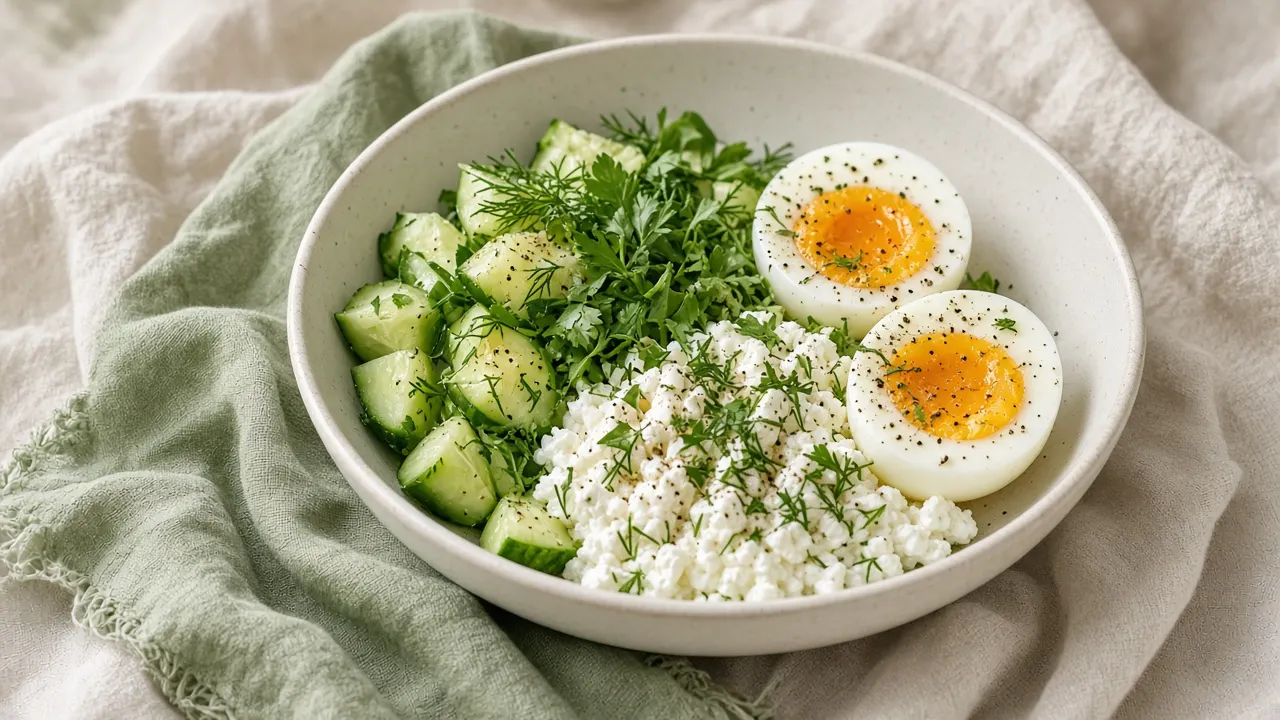
Protein does not “burn fat by itself”. It does help you stay full longer (a 2015 review found a modest fullness effect and higher satiety hormones after higher-protein meals) and keep muscle while you are in a deficit (in energy-restricted diets, a higher-protein pattern modestly limited the loss of fat-free mass). Let’s keep this plain, without the marketing.
When calories drop a little below usual, the body notices through hunger and tiredness. Protein foods — meat, fish, eggs, dairy, beans, tofu — often hold fullness better than the same energy from a sweet drink or an airy snack. That makes protein a useful anchor if you want to lose weight without crash diets rather than live half-starved. Next to it sits a clear calorie deficit.
What protein does (and does not)
Protein helps repair tissue and keep muscle during weight loss — especially if you also move and do some strength work, even at home. It does not cancel energy maths: a large surplus of “good” protein still adds calories. And it does not treat disease. It is food, not medicine.
Everyday cues, not a lab protocol
- Put a protein source in most meals — breakfast included.
- A visual cue many adults use: about a palm (no fingers) per meal, adjusted for appetite and activity.
- Pair it with vegetables and fibre: the plate looks fuller, hunger eases more quietly.
- Skip the powders if ordinary food already covers you — supplements are optional. If you are still deciding, the label questions are in protein powder: do you need it?.
If an hour after lunch you already want something sweet, check first: was there protein and vegetables, or mostly fast carbs and coffee?
What to try this week
Add eggs, cottage cheese, yoghurt without a lot of extra sugar, chicken, fish, or lentils to two meals a day. You do not need grams to one decimal place. You need repetition. If you have kidney disease or a clinician has given you specific advice, follow that; these pages are general — more in the disclaimer.
If some meals keep coming out without protein and you will not cook on those days, a powder is a convenience, not a requirement. Three tubs, and who should skip them, are compared in protein powder for weight loss. One long-sold whey is Optimum Nutrition Gold Standard Whey (ASIN B000QSNYGI, the 5 lb chocolate tub); the listing gives 24 grams of protein per scoop. As an Amazon Associate, Lean Wisely earns from qualifying purchases. The calories in the scoop count like food.
In short
Protein and fullness are linked in a simple way: enough protein in the day makes a gentle deficit easier to keep without thinking about food all the time. That is a habit, not a miracle formula.
Common questions
Does protein help with weight loss?
It does not burn fat on its own. It often holds fullness better and helps keep muscle in a deficit — especially with movement.
How much protein do you need a day?
There is no single number for everyone. A practical cue for many adults is a protein source at most meals (about a palm per serving), adjusted for appetite and medical advice.
Sources
- Leidy et al., American Journal of Clinical Nutrition, 2015: protein, appetite, and fullness during weight loss.
- Wycherley et al., American Journal of Clinical Nutrition, 2012: higher-protein diets and fat-free mass during energy restriction.
What readers think
Lean Wisely articles are general reading. See the disclaimer.