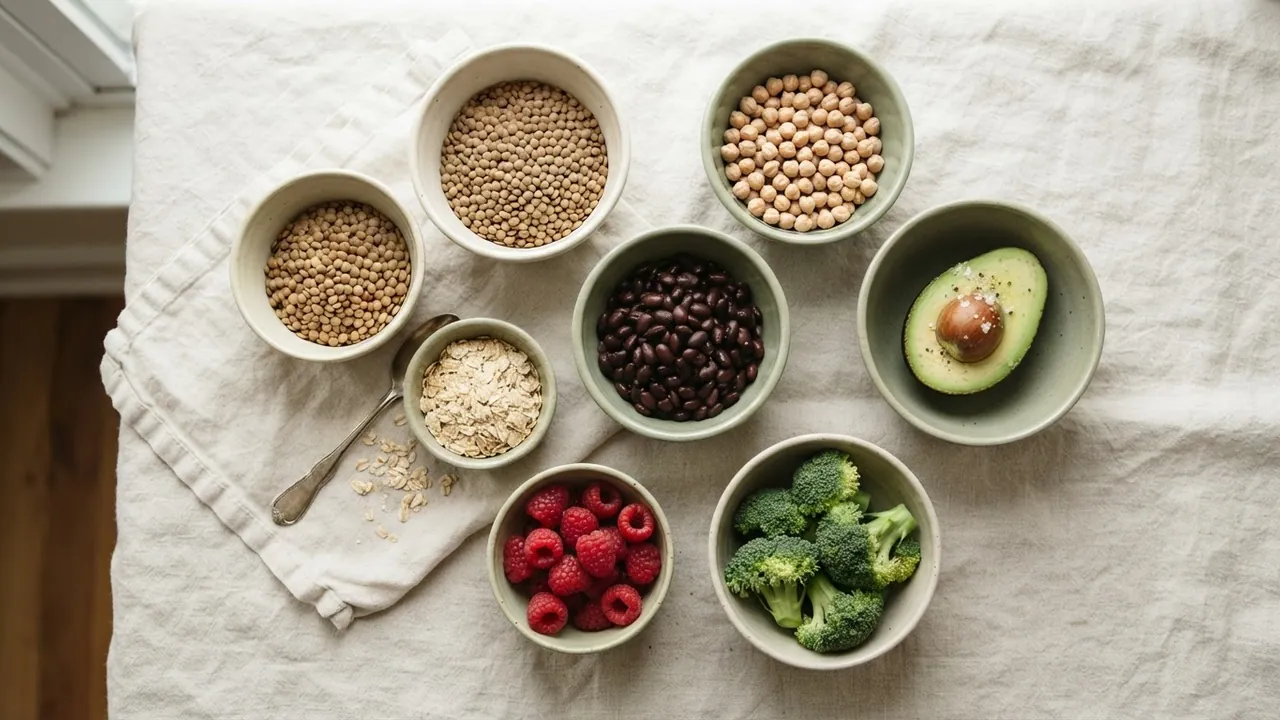
Fibermaxxing is the habit of pushing fiber up, sometimes far and fast. The everyday target is quieter than the trend. MedlinePlus says Americans eat about 16 grams a day, and the recommendation for older children, adolescents, and adults is 21 to 38 grams. WHO asks adults for at least 25 grams of naturally occurring fiber. Moving toward that is reasonable. Gas, bloating, and cramps show up when the jump is sudden. MedlinePlus says to add fiber over a few weeks, and that the discomfort often eases once gut bacteria adapt.
Younger children are not expected to hit that adult range. WHO’s figures for them are lower: at least 15 grams from ages 2 to 5, at least 21 grams from 6 to 9, and at least 25 grams from age 10.
How much fiber counts, and what “too much” means here
21 to 38 grams is the MedlinePlus range, not a score you fail by landing in the middle. At least 25 grams is the WHO floor for adults, and it means fiber that is already in grains, vegetables, fruit, and pulses, not a powder that is supposed to cover the whole day.
The gap is smaller than the trend makes it sound. From an average of about 16 grams up to 21 grams is about 5 grams. Up to WHO’s 25 grams is about 9. That is the size of the change, spread over a few weeks, not a second dinner of bran on Monday.
Reynolds and colleagues (Lancet, 2019) found the clearest risk reduction for several diseases when daily fiber sat around 25 to 29 grams. The same dose-response curves suggested that higher intakes might help further against cardiovascular disease, type 2 diabetes, and some cancers. The review did not name a point where fiber becomes harmful. It pooled 185 prospective studies and 58 trials with 4,635 adults, in the population at large, not in people who already had a chronic disease.
These pages do not publish one official “too much” number. MedlinePlus says a very large amount may interfere with absorption of iron, zinc, magnesium, and calcium, and adds that this is usually not a cause for much concern, because high-fiber foods tend to be rich in minerals. The practical problem people run into is the speed, not a hidden gram ceiling.
Why a sudden jump bloats
A large amount in a short time causes gas, bloating, and abdominal cramps. MedlinePlus is plain about that, and plain that it often passes once the bacteria in the gut get used to the increase. Adding fiber slowly, instead of all at once, can reduce gas or diarrhea.
Water helps fiber move through. MedlinePlus mentions plenty of fluid, about 8 glasses of water or another noncaloric drink a day. That is their practical note, not a quota to feel guilty about. If a clinician has limited your fluids, follow that. A glass with meals, without turning water into a contest, is the habit in water through the day.
Peels matter. MedlinePlus notes that taking the peel off fruit and vegetables cuts the fiber you get from them. An apple with the skin is a different food from an apple you peeled because a blog said so.
A slower version of fibermaxxing
The sources do not hand out a gram ladder such as “add 5 grams a week.” They say a few weeks. The table is an illustration of that pace, not an instruction and not a meal plan with a score.
| Week | What changes | If you bloat |
|---|---|---|
| This week | One food you already eat, at one meal: oats, beans, berries, or an apple with the skin | Stay here |
| Next week | The same idea at a second meal, if the first week was calm | Step back for a few days |
| The week after | A third place: vegetables at dinner, or beans in a soup you already make | Do not add a fourth until it eases |
| After that | Keep what you are already eating, and a drink with the meal | MedlinePlus: this often passes as gut bacteria adapt |
Spread it across meals. A day’s worth tipped into one shake on an empty stomach is the sprint, even when the grams look modest on a label. The packet is the number for that brand and that serving. A blog’s figure for “oats per 100 grams” is not your box. How the panel works is in how to read a food label.
Beans that bloat you on the first spoon do not have to become a bowl this week. Go back to fruit or vegetables and try a smaller spoon of lentils later. A snack in the gap before dinner, if you need one, is easier to keep when it is food you chew: snacks that last until dinner.
Whole foods before a powder
WHO’s 25 grams are naturally occurring fiber. MedlinePlus builds the day from cereals, beans, fruit, vegetables, and whole grains. A powder is a conversation with a clinician when ordinary food cannot get you near the range, or when they have already suggested one. It is not the plan, and this page does not name a dose.
Fiber also sits more quietly next to protein. A bowl of oats on its own and a bowl of oats with eggs or yogurt are different mornings. That part is protein and fullness. The grain itself is not the problem: carbs and the portion.
Fiber is not a stand-in for a GLP-1 drug
You will see fiber called a “natural Ozempic.” The human trials do not support that nickname.
de Jong and colleagues (Frontiers in Endocrinology, 2026) scoped randomized trials of a single, defined fiber and two outcomes: GLP-1 in the blood, and fullness. They kept 52 studies, 1,085 people in all, with a median of 19 people per study. Most were one-off tests (71 percent), not weeks of ordinary eating. Studies that reported a rise in GLP-1 had a non-significant tendency to also report more fullness (odds ratio 2.95, confidence interval 0.87 to 9.98). That interval includes “no link.” In plain words, the studies were too small and too mixed to show that a bump in the hormone reliably meant people felt fuller.
Dextrins were one of the few fiber types that looked more consistent for both the hormone and fullness. The authors still call the evidence constrained: small samples, short trials, a lot of heterogeneity. They ask for longer studies in real life, including while people taper off a GLP-1 medicine. This review did not measure weight. It is not a reason to buy a powder instead of a drug, and it is not a reason to stop a drug.
If you already take a GLP-1 medicine and you are dealing with nausea or constipation, a sharp increase in fiber can make the gut louder. Talk to the clinician who prescribed it before you change how you eat in a big way. This site does not advise on doses or on stopping a medicine. What published reviews report about weight after a GLP-1 medicine is stopped is a separate page, and it is not a fiber plan: weight after stopping Ozempic.
When to leave the intake where it is
A sudden jump is a poor idea if your gut already hurts, if a clinician has asked you to limit fiber (that happens before some procedures), or if you have a bowel disease and you have already been told how to eat with it. This page cannot clear you for a sprint, and it does not prescribe one.
The mineral note from MedlinePlus belongs here too, with its own caveat: very large amounts may reduce absorption of iron, zinc, magnesium, and calcium, and in most cases that is not a cause for alarm, because the foods are rich in those minerals. An apple at lunch is not that situation.
What to try this week
- For two or three ordinary days, glance at packages and see where a fiber line already exists. Tenths of a gram do not matter.
- Add one familiar food at one meal. Not at every meal.
- Put it on a plate you chew, not in a single glass “for the benefit” before breakfast.
- Drink something with the meal. If you bloat, go back one step and stay there for a few days.
- Do not buy a fiber powder because the label mentions weight. Food comes first. A powder is a clinician’s conversation.
These pages are general reading. If you have a medical condition or a prescribed diet, follow your clinician. More in the disclaimer.
In short
Most adults are short of the everyday target: about 16 grams in the US, against 21 to 38 grams from MedlinePlus and at least 25 grams from WHO. Closing some of that gap with food, over a few weeks, is the sensible version of fibermaxxing. The bloating comes from the sprint. Fiber is not a weight-loss drug, and the trials behind the “natural Ozempic” line are too small and too short to carry that claim.
Common questions
Is fibermaxxing safe?
Adding fiber from food toward the everyday target, over a few weeks, with something to drink, matches what MedlinePlus describes. A large amount in a short time is what causes gas, bloating, and cramps. There is no single “safe maximum” in these sources. If your gut is already in trouble, or a clinician has limited fiber, ask before you change it sharply.
Does fibermaxxing help with weight loss?
Fiber can help a meal hold, which MedlinePlus links to feeling full sooner. In the trials Reynolds and colleagues included, higher fiber intakes went with lower body weight, lower systolic blood pressure, and lower total cholesterol. They left out trials whose main aim was weight loss, and trials of supplements. The review does not name a number of kilos. It is not a promise, and it does not replace the rest of how you eat.
How much fiber per day is too much?
These sources do not give one upper number. Reynolds and colleagues saw the clearest disease-risk reduction around 25 to 29 grams and said higher intakes might help further for some diseases. MedlinePlus warns that a very large amount may interfere with iron, zinc, magnesium, and calcium, and says that is usually not a major worry because high-fiber foods are rich in minerals. What people actually feel is bloating when the increase is fast.
What about fiber if you already take a GLP-1 medicine?
Fiber is food. It is not a copy of the medicine. The 2026 scoping review looked at the hormone and at fullness in small, mostly one-off tests. It did not measure weight and did not test stopping a drug. If nausea or constipation is already a problem, talk to the prescriber before a big jump in fiber. This page does not give dosing advice.
Sources
- MedlinePlus (NIH): about 16 grams a day in the US, a 21–38 gram range, gas when fiber jumps, minerals, and fluid.
- WHO, 2023: at least 25 grams of naturally occurring fiber a day for adults; lower amounts for children.
- Reynolds et al., Lancet, 2019: 185 studies and 58 trials; clearest risk reduction at 25–29 grams; lower body weight in the included trials.
- de Jong et al., Frontiers in Endocrinology, 2026: scoping review of 52 trials; small, mostly one-off tests; fiber is not shown to act like a GLP-1 drug.
What readers think
Lean Wisely articles are general reading. See the disclaimer.