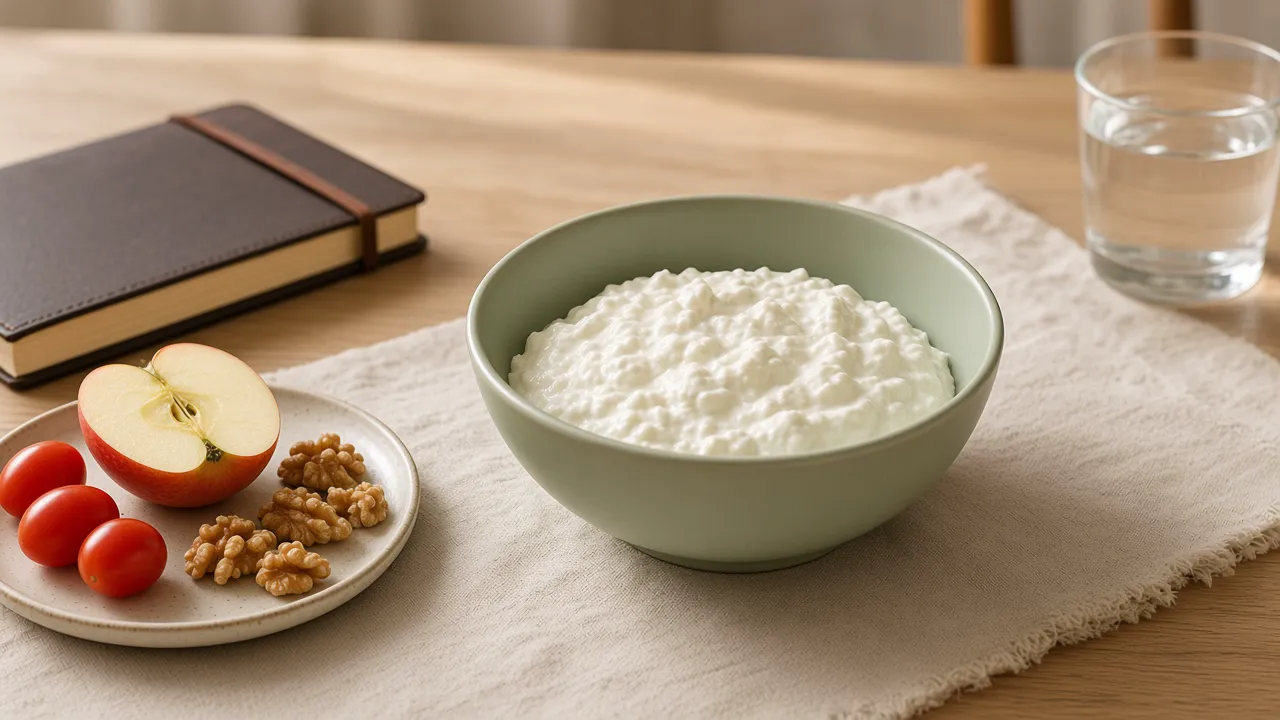
Protein and fullness, in plain language
Protein and fullness in plain language: why protein helps you keep a gentle deficit without living hungry. Calm, practical notes from Lean Wisely.
Read the articleA meal that includes protein usually holds longer than one that does not. These notes stay with ordinary food: how fullness works, and snacks that bridge lunch and dinner. There is no gram target you have to hit.
Protein helps a meal hold for longer. It keeps you fuller than the same calories from a sugary drink or a light snack, and it helps you keep muscle while you are in a calorie deficit. It does not burn fat by itself, and eating more of it than you need still adds calories.
Protein and fullness explains what protein does and does not do, gives an everyday cue for a portion (roughly the size of your palm) and suggests one simple change for this week: adding eggs, yoghurt, fish, chicken or lentils to two meals a day. Filling snacks deals with the gap between lunch and dinner, when hunger often turns into a raid on the biscuit tin. If ordinary food really does not cover your needs, the protein powder review explains when a tub is convenient and when it is unnecessary. If you have kidney disease or a prescribed diet, follow your doctor's guidance.
Protein and fullness in plain language: why protein helps you keep a gentle deficit without living hungry. Calm, practical notes from Lean Wisely.
Read the articleSnacks that keep you full until dinner: Greek yoghurt, eggs, fruit with nuts, or leftover chicken in a bowl — not a packet on the move. Lean Wisely.
Read the article