Calorie deficit in plain language
Calorie deficit in plain language: how to find a rough target, how many calories weight loss actually needs, and how not to turn the plan into exhaustion.
Read the articleA deficit is the gap between what you eat and what you use, looked at over weeks rather than one day. These pieces explain that gap, a way to log without turning the number into a verdict, and the calories that sit in drinks. They are not a menu.
A calorie deficit means using a little more energy than you eat, averaged over weeks. Every approach to weight loss works through it, whether or not it mentions calories. The aim is a gap you can live with, not the smallest number you can survive on.
The calorie deficit explainer covers how the gap works, how large it usually needs to be and why the scale does not follow it day by day. Counting calories shows how to log food for a few weeks without chasing precision: round the numbers, count drinks and cooking oil, look at the seven-day average, and stop counting when it starts to cause more anxiety than insight. Hidden calories in drinks looks at lattes, juice and alcohol, which add energy without much fullness. If your weight has stalled despite careful logging, the weight plateau article goes through the usual reasons. These are general explanations. If you have a medical condition or take medication that affects appetite or weight, ask your doctor.
Calorie deficit in plain language: how to find a rough target, how many calories weight loss actually needs, and how not to turn the plan into exhaustion.
Read the articleHow to count calories without the obsession: soft portion tracking, a rough energy target, and habits instead of policing every gram. A calm Lean Wisely piece.
Read the articleHidden calories in drinks: a 400 ml latte, 500 ml cola, a small juice carton, and a glass of wine, with portions and USDA figures. Lean Wisely.
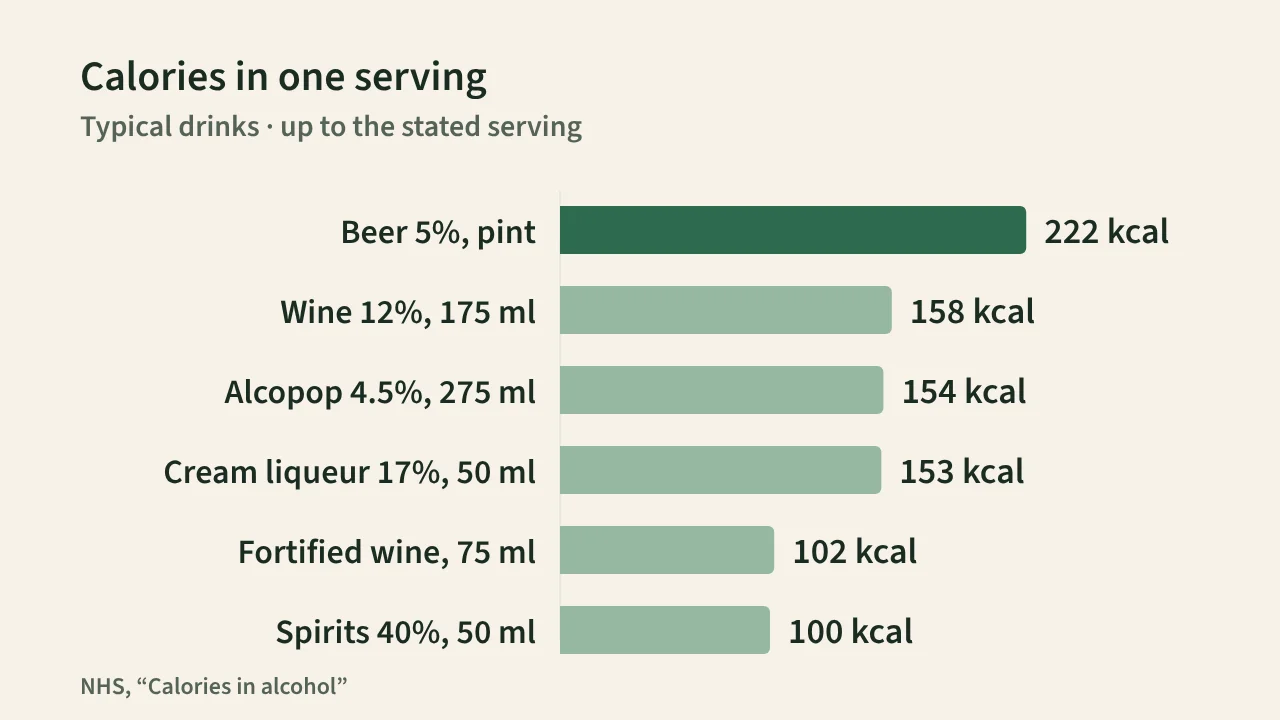
Read the articleAlcohol has 7 kcal per gram, but do a few drinks add weight? Calories per drink from the NHS and what three reviews found, with their limits.
Read the articleCalories in rice, oats, pasta, and other grains, cooked vs uncooked: USDA values per 100 g and per cup, and how to log a pot of grains without mix-ups.
Read the articleChicken breast calories per 100 g, raw vs cooked, from USDA data: 120 kcal raw, 165 kcal roasted. Tables for 150 g and 200 g portions, protein, and logging.
Read the articleHow much weight you can safely lose in a month: about 1–2 lb a week, or 4–8 lb a month. Why the 3,500-calorie rule overpromises, and why faster is not better.
Read the article